
INTRODUCTION
When and how did the art of medicine begin? This is a question for which the complete and correct answer is not found in the history of medicine. This is because the sequence of medical history goes back to a time in the past when humans were not familiar with the recording of history.
Consequently, the information about who was the first person in the world to be afflicted with which disease, and how and by whom it was treated, could not be preserved.
Today, whatever information is available regarding this subject is based on three things: Qiyas (conjecture/ assumption) Aqa’id (beliefs) and Aasar o Shawahid (Remnants /historical evidence).
1. Qiyas: ( Conjecture/ Assumption)

origin of the art of medicine is based on the assumption that when life first appeared in the world, death must also have occurred. Yet by nature, every living being values its life. Observation shows that not only humans but even animals possess an instinctive ability to protect their lives and guard against death.
For example, cattle stop eating grass in case of indigestion. A dog tries to clean its wound by licking it, and so on. It is even believed that humans learned the use of certain medicines and methods of treatment from animals themselves.
Just as observing a snake rubbing its eyes against a fennel plant made humans realize that fennel is beneficial for the eyes. similarly, the practice of enema was learned from the heron. and bloodletting from the rhinoceros. When animals care so much for their health and even treat themselves. it is impossible to assume that humans—who possess superior intellect and wisdom—were ever unaware of the need to protect their health or preserve their life.
Therefore, it is inferred that the art of medicine is as ancient as human existence itself. From the very day humans came into being, they instinctively knew that food and water are essential to survival. Experience then taught them which things are beneficial for life and which are harmful. For example, humans preferred living in caves instead of open plains to protect themselves from harsh weather and wild animals. Likewise, when diseases appeared in the form of pain, wounds, fever, vomiting, diarrhea, etc. humans—by natural instinct—must have attempted to treat them, whether through rest, abstaining from food, or the use of herbs, plants, or other natural materials. Thus, the assumption is quite accurate that with the emergence of human life, under the guidance of nature, the art of medicine also came into existence.
2. Aqa'id (Beliefs)

How was the human being created? The answer to this question varies according to different religious beliefs. For example, Islam teaches that the first human to come into the world was Prophet Adam, whereas non-Muslims do not hold this belief. Similarly, different religions have different beliefs about the origin of the science of medicine.
Some religions attribute this art to the Prophets. Muslims believe that when Prophet Adam came to the world, he was granted certain knowledge by Allah to fulfill the necessities of life — among which the knowledge of medicine was also included. There is also a belief that Prophet Idris initiated all kinds of crafts and philosophy, and the science of medicine was among them. It is also narrated that Prophet Solomon was taught the knowledge of medicine through divine inspiration.
Non-Muslims have their own beliefs regarding the origin of medicine. The Jews consider Prophet Moses as the founder of the art of medicine. The Magians (fire-worshippers) regard their prophet Zoroaster as the originator of medicine. The Hindus consider their deity Brahma as the founder of knowledge and arts (Founder). Some nations have given the status of physician to their religious leaders. The ancient Greeks regarded their religious leader Asclepius I as the first physician. They also believed that Asclepius learned medicine from Prophet Idris. In the Greek language, Prophet Idris is remembered by the name “Hermes.”
3. Aasar o shawahid: (Remnants/ Historical evidence)

To discover the early history of medicine, it was necessary to investigate the origin of disease. Medical and geological research revealed that diseases and germs existed on Earth even before the existence of human beings. According to the research of Sir Arthur Keith, more than thirty thousand (30,000) germs were present on the planet. Therefore, even humans of the Stone Age suffered from diseases caused by germs.
H. Webster writes in his book “Magic” that in the beginning, when humans became aware of disease. they believed that some terrifying force had seized them. Thus, the origin of medicine began with magic, and people treated illnesses with amulets, charms, incantations, and magical rituals.
Research on the history of the world’s oldest civilizations also confirms Webster’s statement that in ancient times (around 3000 BC), magic and sorcery were extremely widespread. People believed that diseases were shadows of evil spirits (ghosts), and to cure them they relied on magic and other superstitions.
When humans realized that some unseen force was responsible for health and disease. the idea of deities emerged, and people began worshipping them. Consequently, gods and goddesses of health and disease came into existence, and their priests began to perform the duties of physicians.
But from a scholarly and technical point of view, the discussion on health and disease begins from 500 BC. and the credit for this goes to the great Greek philosopher Hippocrates (460–377 BC). Hippocrates formally established concepts related to the structure and composition of the human body, its functions and characteristics. and the theories of health and disease, and he gave medicine the status of a distinct science. This is why Hippocrates is remembered by the title “Father of Medicine.”
Conclusion
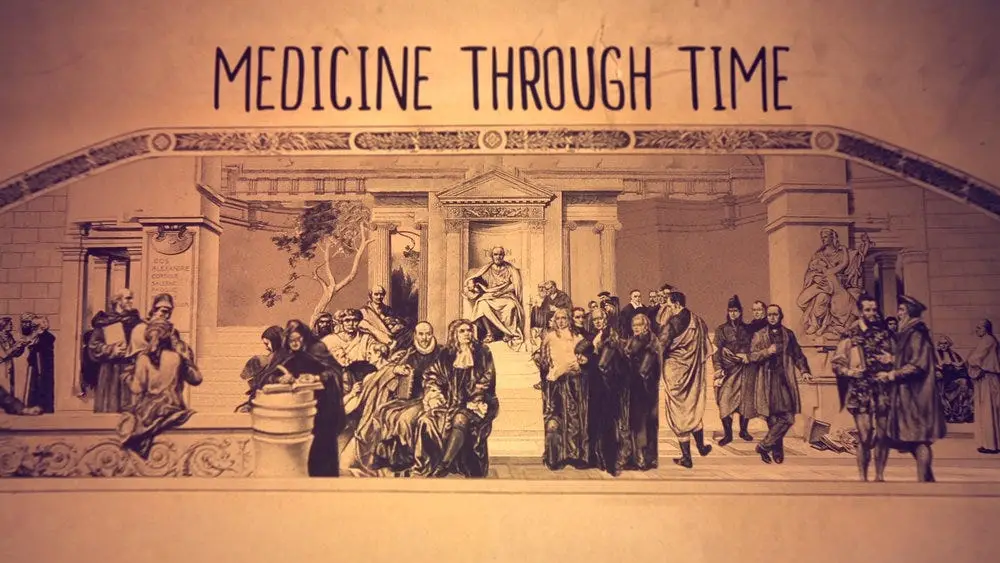
Medicine began with basic human instincts and observations of nature. Over time, different civilizations linked its origin to prophets, gods, and spiritual beliefs. Gradually, humans moved from magic and superstition to logical thinking. This scientific shift became strong around 500 BC when Hippocrates introduced systematic study and gave medicine the status of a true science. In short, the journey of medicine reflects humanity’s continuous effort to understand disease and protect health.