
Babylonian And Assyrian Medicine
Introduction
Babylonian and Assyrian medicine is considered one of the world’s oldest forms of medicine.
 History and Origin

- Emergence of Medicine: This form of medicine emerged from places named Babylon and Assyria, which is why it bears this name.
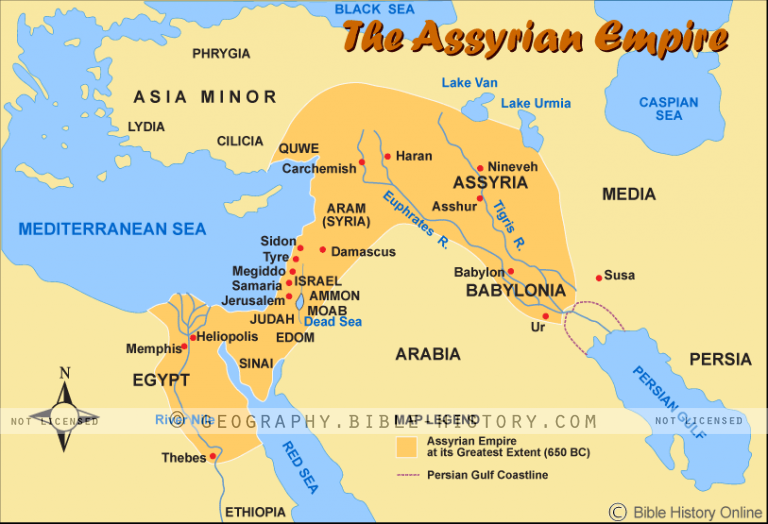
- Region: This medicine flourished in Mesopotamia, an ancient region in South West Asia.
- Geography: Mesopotamia was a very fertile region situated between the Tigris and Euphrates rivers.
- Evidence: Clay tablets and other historical evidence recovered from the excavation of ruins in this area indicate that the story of human civilization began here.
- Sumerian People: According to historians, the Sumer people settled here around 4000 BC, laying the foundation for human civilization and various arts and sciences.
Sumerian and Babylonian Civilization
- Inclusion of Medicine: The study of the Sumerian Culture sheds light on the knowledge and skills of the Sumerian people, which included the science of medicine.
- Division of the State: Around 2000 BC, the Sumerian State of the Sumer people was divided into two parts:
1. Northern Part: Called Assyria (Ashur).
2. Southern Part: Called Babylon (Babil).
- Civilizational Evolution: After the division, this same Sumerian civilization of Mesopotamia was called the Babylonian and Assyrian Civilization.
- Name of the Medicine: The art of medicine practiced here was named after Babylonian and Assyrian Medicine, which is commonly referred to as Babylonian Medicine.
Basic Theory of Babylonian and Assyrian Medicine:
Theory Of Health and Disease:
Babylonian medicine was dominated by outdated superstitious theories and religious beliefs. Health and disease were considered the result of the pleasure or displeasure of the gods and goddesses.
- When a person fell ill, it was believed that they had committed a sin, which angered the deity, and as a form of punishment, they were afflicted with the disease.
- If the disease was minor, it was assumed that the sin was also small.
- If the disease was minor, it was assumed that the sin was also small.
The Second Cause of Disease:
If it was confirmed that a person was innocent but was still suffering from a disease, the belief in such a case was that:
- The disease was not the responsibility of any god or goddess, but of evil powers or evil demons & ghosts.
- These powers would attack a person in the form of a disease with the intention of tormenting them.
Gods of Health:
In Ancient Babylon, deities who granted health were worshipped with the aim of recovering from illness. Some of the gods and goddesses who bestowed health were considered very sacred and healing. Some of them are:
- Ea (Aya): Was the oldest among the gods of health.
- Marduk: Held the power to overcome every illness. The symbol Rx, which is still considered a symbol of healing today, is attributed to this very deity.
- Nabu or Nebu: This god was considered very powerful, and his consent could remove all kinds of trouble.
Prominent Goddesses
Among the goddesses, Ishtar and Allata were quite famous. But the greatest of all was the Great Goddess Gulae, who had the ability to counteract the effect of poisons
Evil Powers: (Demonic Force)
The people of Babylon also believed that demonic forces and evil spirits were the cause of diseases. Under this belief, many demons were famous. Each demon was responsible for causing a specific illness.
- Ashakku: Cause fever.
- Namtaro: Spread of Plague.
- Atakku: Cause of Throat ailments.
- Alu: Cause bone Disease.
- Gallu: Brings Disease of the Hands.
- Rabisu: Responsible for skin disease.
- Pazuzu: Fatal disease/ specifically for Deadly.
Babylonian Physicians and Their Charecteristic
In ancient Babylon, physicians (doctors) underwent formal training in the art of medicine. The schools for medical education were usually attached to temples.
Foundation of Medical Education:
During their studies, students were educated about the following:
- Gods and Goddesses of Health (whose favor was considered necessary).
- Demons that Cause Disease (believed to be the original source of illness).
- Treatment methods, which included incantations (exorcism), medicine, and other therapeutic measures.
Classes of Physicians (Based on Standard and Skill)
The physicians were divided into three main classes based on their expertise and the nature of their practice:
1. Baru:
- Specialty: Experts in spiritual healing and divination.
- Method: Focused on determining the cause of the disease, often through observing omens (like liver inspection), to predict the outcome and find the offense against the gods.
2. Ashipu:
- Name Meaning: The priest who drives out suffering through incantations/spells (exorcist).
- Method: Their job was to expel evil spirits or demons from the patient’s body and connect them with the God of Health.
3. Azu:
- Role: These were the true physicians in the modern sense.
- Method: They treated illnesses not by magic or sorcery, but by medicines (herbal remedies) and, at times, performed surgical procedures.
The Azu were pragmatic healers focusing on drugs and surgery, while the Baru and Ashipu primarily employed spiritual, diagnostic, and magical/ritualistic methods.
🧪 Babylonian Diagnostic Methods
In the ancient Babylonian-Assyrian civilization, strange and sacred methods were common for diagnosing diseases.
Techniques and Sign:
1. The Oil and Water Method:
- The Babylonians considered water and oil to be sacred substances.
- Diagnostic Process: Water and oil were combined in a vessel.
- Sign of Curability: If a ring of oil (ring) appeared on the surface of the water, it was considered a sign that the disease was treatable/curable.
- Sign of Poor Prognosis: If the oil spread across the surface of the water, then the hope for recovery was low.
2. Diagnosis by Fire Color:
Diagnosis was also made by lighting a fire and observing its color.
- Good Omen: Red color of the fire was considered a good sign.
- Bad Omen: Yellow or green color was considered a bad sign.
Observation of Bodily Substances:
Conclusion: Babylonian medicine employed both spiritual/magical methods (involving water, oil, and fire) and physical observation of bodily substances for diagnosis.
However, there is also evidence that during that time, diagnosis was also made by observing the color of the patient’s bodily excretions:
- The patient’s saliva.
- Urine.
- Feces
⚕️ Treatment Methods in Babylonian Medicine
The method of treatment in ancient Babylonian medicine was heavily influenced by superstitions and religious beliefs.


Spiritual Conception of Illness and Treatment:
 Spiritual Conception of Illness and Treatment:
- Seeking Help: To be cured, the patient would worship the god of health and seek refuge from the devil/demon.
- Physician’s Role: The physician (healer) would attempt to defeat the demonic power through incantations, exorcism, and magic.
- The Liver Theory: An interesting concept was that since the liver produces blood, an evil spirit would invade the liver to drink the blood.
- Treatment: Attempts were made to expel the evil spirit by making an incision at the site of the liver or by piercing/perforating the liver.
- Mental Illnesses (Insanity): In cases of mental illnesses like madness, the final remedy was attempting to remove the evil spirit by drilling a hole in the patient’s skull. Evidence for this comes from the trephined skulls recovered during excavations.
- Treatment for High-Status Individuals: If the patient was a major figure, such as a king or minister, an animal (sheep or goat) would be offered as a sacrifice in their name.
- Procedure: The evil spirit was then attempted to be removed by perforating the liver of the sacrificial animal.
- Medical Training: Specific education and training were given on exactly where to make the incision on the liver for different ailments, utilizing clay models of the liver for instruction.
Medications Used:
 Medications Used:
- Types of Medicines: All kinds of medicines—vegetable (herbal), mineral, and animal—were used for treatment.
- Number and Popularity: Over 100 drugs were in use at that time. Laxatives (purgatives) and carminative (gas-relieving) drugs were commonly practiced.
- Snakebite: In cases of snakebite, a wild remedy called Wildroot was used.
📝 Conclusion
The above statement proves that while Babylonian-Assyrian medicine was undoubtedly dominated by weak beliefs based on superstitions (which were a part of the civilization at that time), the art of medicine had also begun to evolve.
🏛️ Sources and Regulations of Babylonian and Assyrian Medicine
📜 Sources of Information

The main sources of information regarding Babylonian and Assyrian medicine are as follows:
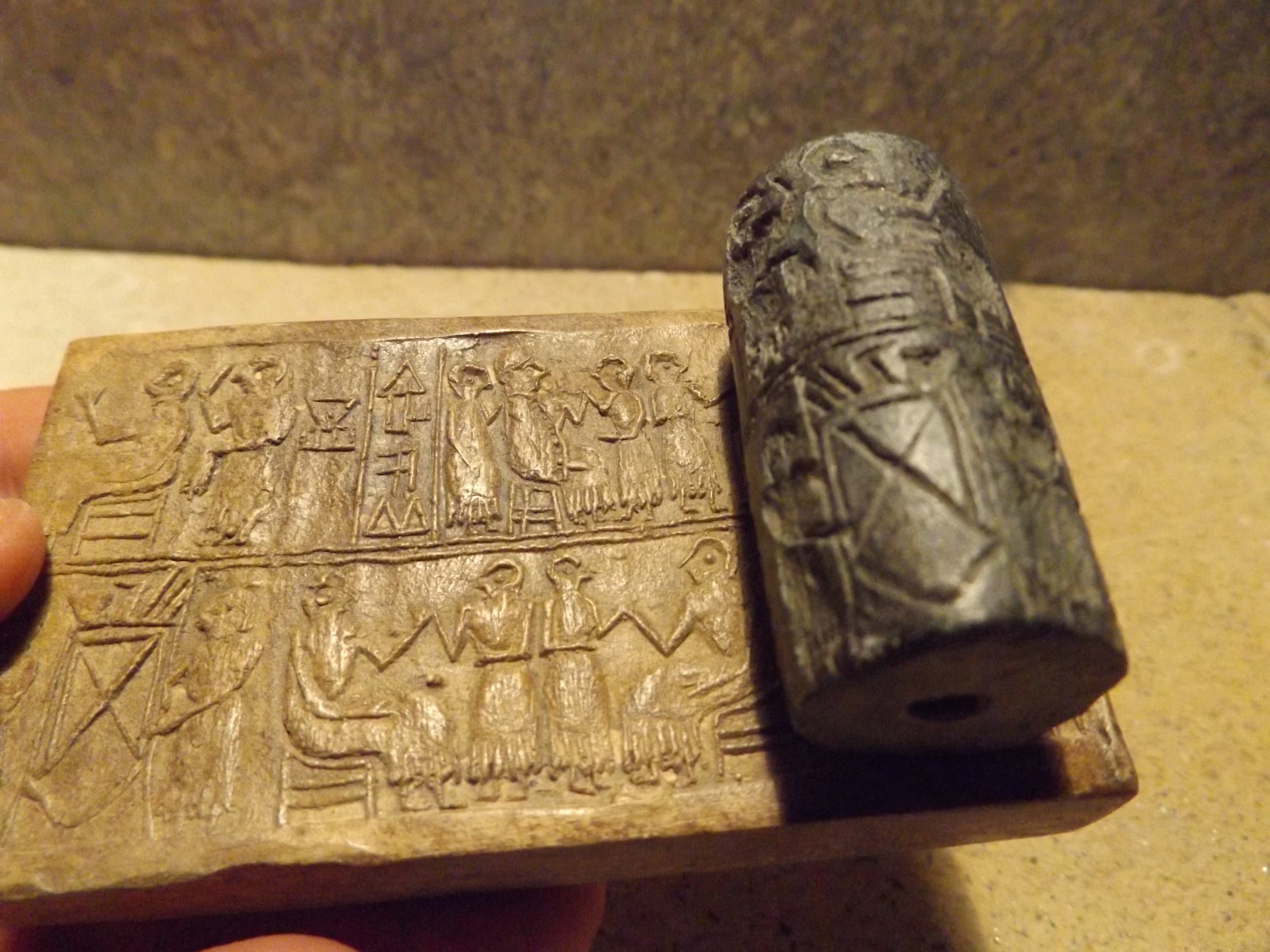
- Sumerian Seal: A seal (dated 3300 BC) is present in the Welcome Museum of History in London, which belongs to a Sumerian physician. This proves that the profession of medicine had come into existence during the Sumerian era.
- Historical Clay Tablets: The specific historical references related to Babylonian and Assyrian medicine are the clay tablets recovered from Mesopotamia. A considerable number of these tablets are preserved in the British Museum.
⚖️ The Code of Hammurabi for Medicine
The era of the famous Babylonian Emperor Hammurabi (1728-1686 BC) is well-known for the advancement of arts and sciences. Hammurabi established certain rules and regulations for every profession.
- Code Details: His code consisted of 282 law codes, of which laws numbered 225 were specifically designated for physicians.
Key Regulations (for Physicians)
The key regulations (4) are as follows:
1. Compensation for Successful Surgery: If a physician performs an operation on a patient with a bronze lance (scalpel) and the dangerous wound is cured:
* The physician shall receive ten (10) silver shekels.
* If the patient is a slave, their master shall give the physician only two (2) silver shekels.
2. Penalty for Dangerous Surgery: If the wound becomes dangerous due to the physician’s lancet and causes death, the physician’s hands shall be cut off.
3. Compensation for the Death of a Slave: If the patient is a slave and is wounded by the physician’s manual lancet such that death occurs, the physician is obligated to give the master a slave in compensation for the slave.
4. Compensation for Curing a Bone or Organ: If a physician cures an affected organ or bone:
(a) They shall receive five (5) silver shekels.
(b) If the patient is a slave, two (2) shekels.
(c) If the patient is a freed slave, three (3) silver shekels.
Note: The above Code of Hammurabi used to be carved on the pillars of temples, and evidence of this still exists today.